Dorothy Bowles Ford: The Woman Washington Never Photographed — Her Untold Story

Dorothy Bowles Ford threw a tea party for her daughter-in-law and couldn’t stop touching her cheeks. She called Emily “my baby.” In that small, tender gesture — a mother’s pride spilling over at a 2008 wedding reception — you see everything you need to know about Dorothy Bowles Ford. Not the political dynasty. Not the congressional history. Just a woman who loved fiercely, gave quietly, and asked for nothing in return.
Her name doesn’t appear on any ballot. You won’t find her Wikipedia page, because there isn’t one. Her photographs are almost impossible to locate online. And yet, Dorothy Bowles Ford sat at the very center of one of the most consequential political families in Tennessee history — raising a congressman, supporting another, and living through enough public scandal and private heartbreak to break most people twice over. She didn’t break. She just kept showing up.
Quick Bio: Dorothy Bowles Ford
| Detail | Information |
|---|---|
| Full Name | Dorothy Jean Bowles Ford |
| Born | Approximately 1949, Memphis, Tennessee |
| Nationality | American |
| Ethnicity | African-American |
| Education | Memphis State University (did not complete degree) |
| Occupation | Consumer Coordinator & Regulatory Functions Manager, Potomac Electric Power Company; Administrative Support, Ford Congressional Office |
| Marriage | Harold Eugene Ford Sr. (February 10, 1969 – 1999; divorced) |
| Children | Harold Ford Jr., Newton “Jake” Ford, Sir Isaac Ford |
| Known For | Mother of Harold Ford Jr.; former wife of Harold Ford Sr., first African-American congressman from Tennessee |
| Current Status | Private life; believed to reside near New York City |
Memphis, 1949: Where She Came From
Memphis in the late 1940s wasn’t gentle. It was a city of layered tensions — a river town defined by music, money, race, and resistance. The same streets that produced Beale Street blues also produced the machinery of segregation, and navigating both required a particular kind of clarity from the people who grew up there.
Dorothy Jean Bowles was born into that city around 1949. She was the only child of her parents, Mr. and Mrs. Bowles — a detail that makes her later role as the mother of three sons all the more striking. She knew what it meant to be the only one. She also knew what it meant to carry everything herself.
She completed high school in Memphis and went on to attend Memphis State University, showing ambition that wasn’t common for young Black women in that era and region. But she didn’t finish. Family demands pulled her away before she could graduate. That line — dropped out due to family demands — carries a whole world inside it. Life had other plans. She didn’t let it stop her anyway.
The Meeting That Changed Everything
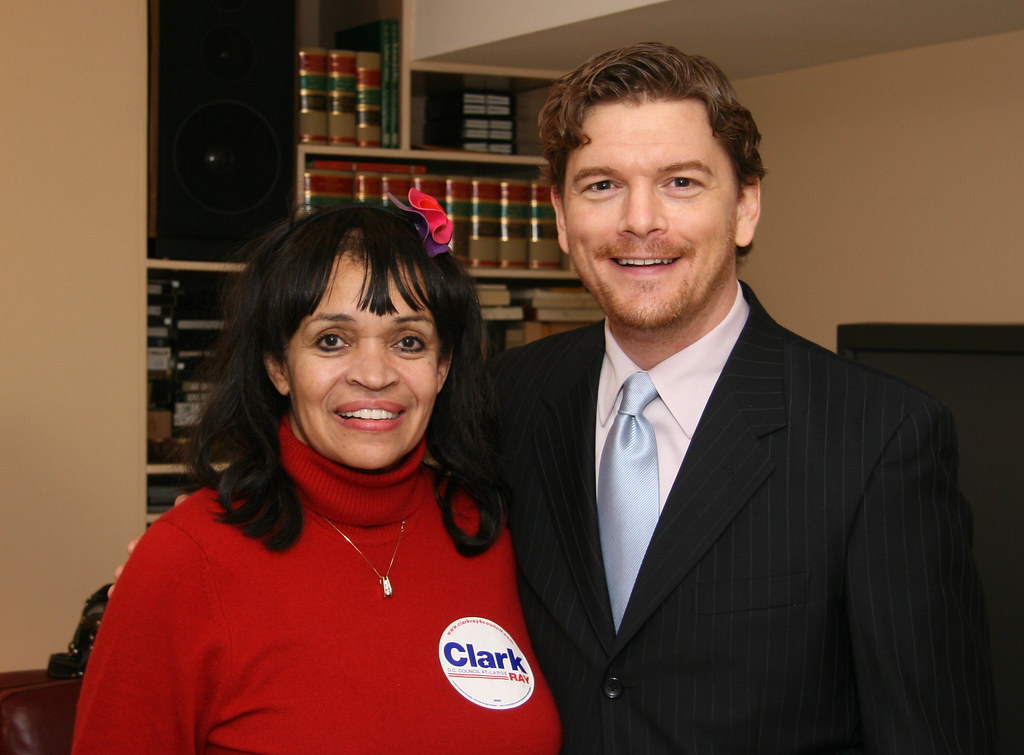
Sometime around 1967 or 1968, Dorothy Bowles met Harold Eugene Ford Sr. They were teenagers in the same city, and what started as a high school connection became something that would shape the next three decades of both their lives. They married on February 10, 1969. She was approximately 20 years old. He was 24.
Harold Ford Sr. had just finished school, earned degrees from Tennessee State University and a mortuary science credential from John A. Gupton College, and joined his family’s funeral business. Politics was already in the air for him. Five years into their marriage, he ran for Congress. He won. In 1975, Harold Ford Sr. was sworn in as the first African-American to represent Tennessee in the United States Congress.
Dorothy Bowles Ford became, in that moment, something she’d never campaigned to be: a political figure’s wife in the full, demanding, unforgiving sense of the phrase. The spotlight found the family. She chose to step out of it.
A Career of Her Own
Here’s what the history books miss: Dorothy wasn’t just waiting at home. She was working.
She took a professional position at Potomac Electric Power Company — known as PEPCO — in Washington, D.C., where she served as a consumer coordinator and regulatory functions manager. It wasn’t ceremonial. Consumer coordination and utility regulation require real expertise, sustained attention, and the ability to manage competing interests under pressure. She did that job while simultaneously managing administrative duties for her husband’s congressional office.
She also extended her reach further than most political spouses ever attempt. She worked with the U.S. Department of Agriculture on improving school lunch programs in Tennessee — a quiet act of policy engagement that rarely gets mentioned but speaks to where her priorities actually lived. Better food for children in her home state. She didn’t hold a press conference about it.
Political campaigns run on invisible labor. Constituent calls get returned. Community events get organized. Schedules get managed. Dorothy did that work while raising three boys in a household under constant national scrutiny. She never ran for anything. She didn’t need to.
Three Sons, One Foundation
The Fords are a dynasty, but dynasties don’t raise themselves. Dorothy did the work that doesn’t come with a title.
Her eldest, Harold Ford Jr., was born on May 11, 1970, in Memphis. He attended St. Albans School, went on to the University of Pennsylvania, and then the University of Michigan Law School. At 26, he stepped into his father’s congressional seat — one of the youngest African-American representatives in U.S. history at that time. He served from 1997 to 2007, representing Tennessee’s 9th District. After Congress, he became a managing director at Morgan Stanley, an analyst for NBC and MSNBC, an author, a professor at NYU’s Wagner School of Public Service, and eventually executive vice president at PNC Bank.
Her second son, Newton “Jake” Ford, had a rougher path. He faced legal troubles in his younger years — arrests on charges including assault, DUI, and marijuana possession. He cleaned himself up. In 2006 he ran as an independent candidate for Tennessee’s 9th congressional district. He didn’t win. He showed up anyway.
Sir Isaac Ford, her third son, ran for the Memphis City Council in 2003 without success, and later managed his brother Jake’s 2006 congressional campaign. Three sons, three very different trajectories. One mother who held the center while the world watched the edges.
Six Years Under a Federal Cloud
In 1987, the family’s world shifted hard. Harold Ford Sr. was indicted by federal prosecutors on 19 counts — conspiracy, bank fraud, and mail fraud — connected to allegedly fraudulent loans tied to a collapsed Tennessee banking empire run by brothers Jake and Cecil Butcher. The loans, which totaled nearly $1.5 million and stretched from 1976 to 1983, were characterized by prosecutors as bribes. Harold Ford Sr. maintained they were legitimate business transactions related to the family funeral home.
The first trial, held in Memphis in 1990, ended in a mistrial. The jury deadlocked exactly along racial lines — eight Black jurors for acquittal, four white jurors for conviction. Prosecutors pushed for a change of venue. A second trial was held in Jackson, Tennessee, in 1993, before a jury of eleven whites and one Black juror. On April 9, 1993, Harold Ford Sr. was acquitted of all charges.
Six years. That’s how long the indictment hung over the Ford household. Dorothy was his wife for every day of it — managing the children, maintaining the family’s stability, continuing her own work, and saying nothing publicly while the legal system ground through its long, racially charged process. She didn’t collapse. She didn’t retreat from the family or the work. She kept the household together while a federal case threatened to dismantle it.
Divorce, 1999
The marriage lasted thirty years. They divorced in 1999. The specific reasons have never been made public, and both parties handled the separation without drama. There was no public accusation, no media event, no bitter legal spectacle. By all available accounts the divorce was settled amicably, privately, and with minimal disruption to the children’s lives.
The timing, though, tells its own story. Harold Sr. had retired from Congress in 1997. The long legal ordeal had finally ended. The house that had been held together through political pressure and federal prosecution was finally at rest — and apparently so was whatever had kept them together inside it. Sometimes peace arrives and reveals what the noise had been covering.
Harold Ford Sr. remarried within the same year. His second wife, Michelle Roberts, would later become the executive director of the National Basketball Players Association — another accomplished woman choosing a life in the background of large institutions. Dorothy did not remarry. She never has.
After 1999, she withdrew from political life entirely. No more campaigns. No more administrative roles. She stepped fully out of the public sphere and into a life she controlled.
Controversies: What Honesty Requires Saying
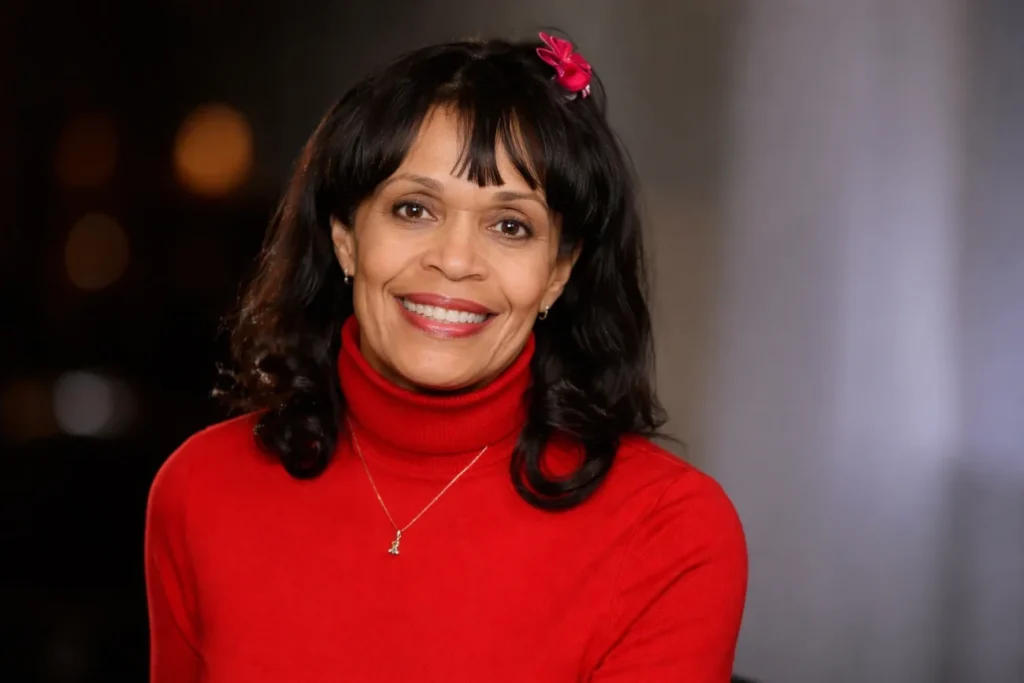
The Ford family’s legacy carries real weight and real complications, and Dorothy’s story can’t be told honestly without acknowledging both.
Harold Ford Sr.’s years in Congress were marked not just by the federal indictment but by sustained criticism of the broader Ford political machine in Memphis. Critics — including Republican opponents during the 2006 Senate race involving Harold Jr. — described the Ford operation as a family-controlled patronage system where loyalty to the dynasty replaced broader democratic accountability. Harold Sr.’s brothers John, Emmitt, and Joe all held political positions in the Memphis area, and the network of Ford-aligned officeholders drew persistent accusations of nepotism and machine politics.
Dorothy is not named in these critiques. She held no elected office and ran no political operation. But she was administratively embedded in Harold Sr.’s congressional work for years. She was part of the household that produced this dynasty. It’s impossible to fully separate her from the context she lived and worked inside, even if her hands were clean.
Jake Ford’s legal troubles added another layer of complexity to a family that the public already associated with both achievement and controversy. Dorothy raised him. She also watched him stumble, and apparently watched him recover. That’s a mother’s whole job, sometimes — witnessing the falls and staying anyway.
Where She Is Now
Dorothy Bowles Ford is in her mid-70s. She lives, by most credible accounts, in or near New York City — likely connected to proximity to Harold Jr., who has spent significant years there. She is a grandmother. Harold Jr. and his wife Emily have two children, Georgia Walker Ford and Harold Eugene Ford III, and by all accounts Dorothy dotes on them.
She has no known social media presence. She gives no interviews. She makes no public appearances on record. Since 1999, she has lived exactly as she apparently wanted to — outside the reach of the cameras that spent decades pointed at the men in her life.
She’s not hiding. She’s just finally living for herself.
Conclusion
Every political dynasty has a foundation. For the Fords, that foundation was a woman who left college at 20, married into history she didn’t ask for, built a professional career alongside her role as a political spouse, raised three sons through a federal fraud trial, and walked away from a thirty-year marriage without a single public grievance.
Harold Ford Jr. has spoken about his father’s influence on his political development. But values don’t come from one parent. They come from the household. They come from watching someone manage crisis with dignity, hold structure while the ground shakes, and show up — every day, without credit — for the people who need them.
Dorothy Bowles Ford’s legacy isn’t measured in votes or titles. It’s measured in the next generation — in a son who understood public service from the inside because he watched it practiced, not just preached, in the woman who raised him.
History remembers the people at the podium. It tends to forget the people who made it possible for them to stand there. Dorothy Bowles Ford is one of the forgotten ones. She probably prefers it that way.
But her story is worth knowing. Quiet strength isn’t passive. It’s a decision, made every morning, to keep going without being seen.
You may also like Milaine Desaulniers
FAQ
1. Who is Dorothy Bowles Ford?
Dorothy Bowles Ford is an American woman best known as the former wife of Harold Ford Sr. — the first African-American congressman from Tennessee — and the mother of Harold Ford Jr., who followed his father into Congress.
2. When was Dorothy Bowles Ford born?
She was born approximately in 1949 in Memphis, Tennessee. Her exact birth date has not been made public.
3. Did Dorothy Bowles Ford go to college?
Yes. She attended Memphis State University but did not complete her degree, reportedly because of family demands.
4. What was Dorothy Bowles Ford’s career?
She worked at Potomac Electric Power Company as a consumer coordinator and regulatory functions manager. She also handled administrative duties for Harold Ford Sr.’s congressional office and worked with the Department of Agriculture on school lunch programs in Tennessee.
5. When did Dorothy Bowles Ford marry Harold Ford Sr.?
They married on February 10, 1969. She was approximately 20 years old.
6. How long were they married?
Approximately 30 years. They divorced in 1999.
7. Why did they divorce?
The reasons have never been made public. The divorce was reportedly handled amicably and without a public trial.
8. Did Dorothy Bowles Ford remarry?
No. To public knowledge, she has not remarried following her 1999 divorce.
9. Who are Dorothy Bowles Ford’s children?
She has three sons: Harold Ford Jr., born May 11, 1970; Newton “Jake” Ford; and Sir Isaac Ford.
10. What is Harold Ford Jr. known for?
He served as a U.S. Congressman from Tennessee’s 9th District from 1997 to 2007. He later held senior positions at Morgan Stanley and PNC Bank and worked as a political analyst for NBC and MSNBC.
11. Was Dorothy affected by Harold Ford Sr.’s federal indictment?
She was his wife throughout the entire six-year period (1987–1993) during which he faced federal charges for fraud and conspiracy. He was acquitted of all charges in April 1993. Dorothy never commented publicly on the case.
12. Where does Dorothy Bowles Ford live now?
Available sources indicate she lives in or near New York City, though she maintains a strictly private life.
13. Is there a Wikipedia page for Dorothy Bowles Ford?
No. No Wikipedia page currently exists for her.
14. Is Dorothy Bowles Ford on social media?
No known social media presence has been publicly identified.
15. What is Dorothy Bowles Ford’s estimated net worth?
No verified figure is available. Estimates circulating online range from $500,000 to $1 million, but these cannot be confirmed and should be treated as rough guesses only.