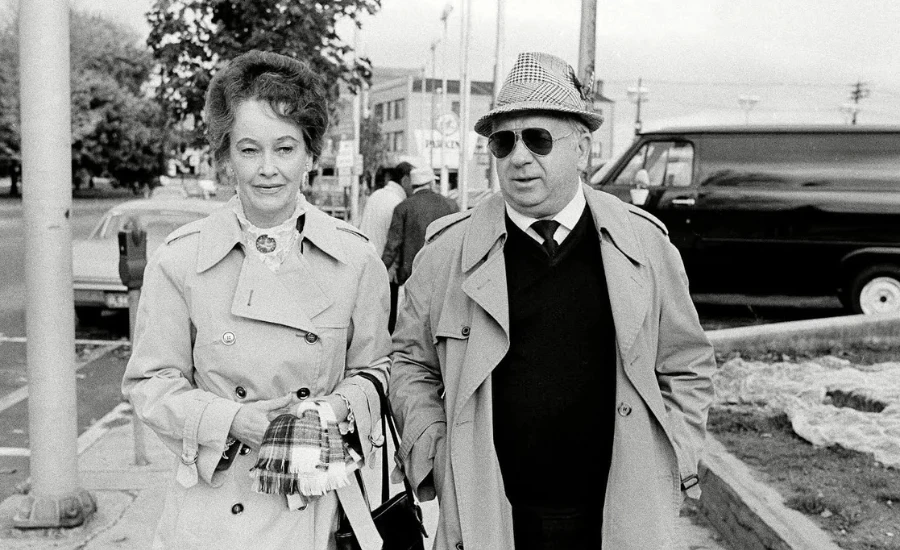
Christa Pike: Thirty Years on Death Row And an Execution Date That Changes Everything

Christa Pike. A groundskeeper at the University of Tennessee’s agricultural campus found the body on January 13, 1995. He testified at trial that the remains were so badly beaten he initially thought they belonged to an animal. They belonged to nineteen-year-old Colleen Slemmer, who had been alive the night before. She had gone out with three people she knew from the Job Corps training center where she lived and studied. One of them tortured and killed her for roughly thirty to sixty minutes while the others watched and participated.
That person was Christa Gail Pike. She was eighteen years old.
Now forty-nine, Pike sits alone as the only woman on Tennessee’s death row. On September 30, 2025, the Tennessee Supreme Court issued a death warrant scheduling her execution for September 30, 2026 — exactly one year to the day. If carried out, she will be the first woman executed in Tennessee in more than two hundred years, and only the nineteenth woman executed in the United States since the modern death penalty was reinstated in 1976.
Her case raises real, unresolved questions about justice, mental illness, childhood trauma, and who deserves to die. It also involves a murder so deliberately brutal that those questions have never been easy to answer.
Quick Profile: Christa Pike
| Detail | Info |
|---|---|
| Full Name | Christa Gail Pike |
| Born | March 10, 1976, Beckley, West Virginia |
| Age (2026) | 50 |
| Victim | Colleen Slemmer, 19, murdered January 12, 1995 |
| Location of Crime | Near University of Tennessee campus, Knoxville |
| Co-defendants | Tadaryl Shipp (boyfriend, age 17 at crime); Shadolla Peterson (friend, age 18) |
| Convicted | March 22, 1996 — first-degree murder and conspiracy to commit murder |
| Sentenced | March 30, 1996 — death by electrocution; 25 years for conspiracy |
| Current Status | Death row, Riverbend Maximum Security Institution, Nashville, TN |
| Execution Date Set | September 30, 2026 |
| Prison Incidents | 2001: attempted murder of fellow inmate; 2012: escape plot uncovered |
| Mental Health Diagnoses | PTSD, bipolar disorder, congenital brain damage (per defence filings) |
Early Life: Beckley, West Virginia, and a Childhood That Left Marks
Christa Pike was born prematurely on March 10, 1976, in Beckley, West Virginia, to Carissa Hansen and Emil Glenn Pike. Her parents were together twice — married for two years, divorced for a year after Hansen was found to have been cheating, then remarried for another two years. Neither version of that marriage was stable. Both parents were frequently neglectful.
An aunt later described the infant Christa crawling through piles of dog feces on the floor, with no adult intervening. Hansen continued drinking even after being told her toddler was experiencing severe seizures — a medical fact that Pike’s defence attorneys would later present as evidence of prenatal alcohol exposure contributing to congenital brain damage. Forensic evaluations conducted for her appeals found she had an organic brain malformation, not just a difficult upbringing.
Her paternal grandmother stepped in when no one else did. By Christa’s own account, her grandmother was the only person who made her feel genuinely loved. When that grandmother died in 1988, Christa was twelve years old, and whatever anchor she’d had to stability went with her.
The years that followed were chaotic in every direction. Christa cycled through schools as her home situation changed. Court filings from her appeals describe childhood sexual victimisation, physical abuse by family members and their associates, and multiple suicide attempts — including one reported overdose in third grade, when she was approximately nine. She dropped out of high school. She used drugs. She ran away. In tenth grade, she was placed in a juvenile facility.
It was there that she heard about Job Corps.
The details of Christa Pike’s early life do not explain what she did at eighteen. They do not excuse it. But they are part of the record, placed there by courts, and they matter for understanding how she got to Knoxville.
The Turning Point: Job Corps and a Rivalry That Turned Lethal

Job Corps is a federally funded residential program aimed at giving low-income young people vocational training and a path toward employment. When Pike enrolled at the Knoxville, Tennessee, Job Corps Center in late 1994, she was eighteen and carrying most of the above history without having received treatment for any of it. She was working toward a GED and hoping to train as a nursing assistant.
She met Tadaryl Shipp there. He was seventeen, a year younger, and by multiple accounts a violent, gang-involved young man with his own history of abuse and psychological disturbance. Court filings from Pike’s defence describe Shipp as someone who had been in a psychiatric facility before arriving at Job Corps and who physically abused Pike during their relationship. They developed shared interest in occult imagery and what was described at trial as devil worship — though forensic analysts who later reviewed the case suggested this was more adolescent performance than sincere belief.
Colleen Slemmer was also at Job Corps. She was nineteen. Pike became convinced — apparently without solid evidence — that Slemmer was pursuing Shipp. According to witness testimony and Pike’s own confession, the jealousy became consuming. She planned, with Shipp and their friend Shadolla Peterson, also eighteen, to lure Slemmer to an isolated location outside the campus.
The plan worked. Slemmer went with them.
The Crime: January 12, 1995
Note on content: This section describes the crime accurately, using court records and trial testimony. It does not include gratuitous detail beyond what the judicial record establishes.
On the night of January 12, 1995, Pike, Shipp, and Peterson led Colleen Slemmer to an abandoned steam plant in a wooded area near the University of Tennessee’s agricultural campus. The pretext, according to court records, was smoking marijuana together.
What followed lasted somewhere between thirty minutes and an hour, by Pike’s own estimate. The attack included beating, kicking, and cutting Slemmer with a box cutter. A pentagram was carved into her chest. Slemmer begged for her life. She tried to crawl away. Witness accounts indicate Pike mocked her pleas, including reportedly asking her whether she still believed in God.
Colleen Slemmer was nineteen years old. She did not survive.
After the killing, Pike showed a fragment of Slemmer’s skull to other Job Corps residents — essentially presenting it as a trophy. That fragment later became evidence in the prosecution’s case. Colleen Slemmer’s mother, May Martinez, spent years requesting the skull fragment’s return for proper burial. Tennessee authorities kept it as evidence, stating it could not be returned while the case remained open pending Pike’s execution.
Police arrested Pike, Shipp, and Peterson within days. When questioned, Pike confessed. Her demeanour during questioning was described as showing very little remorse.
Trial and Conviction: 1996
The trial moved quickly. Pike was charged with first-degree murder and conspiracy to commit first-degree murder. Tadaryl Shipp was charged with the same counts and tried separately. Shadolla Peterson agreed to cooperate with prosecutors, testifying against both Pike and Shipp in exchange for a plea deal.
On March 22, 1996, after only a few hours of deliberation, a jury found Pike guilty on both counts. On March 30, 1996 — a few weeks after her twentieth birthday — she was sentenced to death by electrocution and to a consecutive 25 years for the conspiracy charge. She became the youngest woman sentenced to death in the United States during the post-Furman period.
She broke down in uncontrollable sobs when the sentence was delivered.
In January 1997, Shipp was also found guilty on both counts. Because he had been seventeen at the time of the murder — one year younger than Pike — he was ineligible for the death penalty under existing law. The jury could not unanimously agree on life without parole, so the judge sentenced him to life with parole eligibility, plus a consecutive 25 years for conspiracy. Shipp was denied parole in October 2025. Peterson, who testified for the state, received six years’ probation.
One year’s difference in age. That is the legal margin between a death sentence and parole eligibility.
Thirty Years Behind Bars: What Happened After Conviction

Pike’s post-conviction record is extensive, complicated, and sometimes contradictory.
She launched, then cancelled, then relaunched appeals of her conviction through the Tennessee state courts. In June 2001, then again in June 2002, she actually asked the courts — against her own lawyers’ advice — to drop her appeal and proceed with execution. A criminal court judge set an execution date for August 19, 2002. That date was later halted when her attorneys intervened and the case went back into the appeals process.
The 2001 Prison Attack: On August 24, 2001, Pike attacked fellow inmate Patricia Jones, attempting to strangle her with a shoestring. Jones, who was serving a life sentence for an unrelated murder, nearly died. The Tennessee Department of Corrections alleged that Natasha Cornett — a convicted murderer herself — assisted Pike in the attack, though investigators found insufficient evidence to charge Cornett. Pike was convicted of attempted first-degree murder in 2004 and received an additional 25-year sentence.
The 2012 Escape Plot: In March 2012, authorities uncovered a plan by Pike to escape from prison. The scheme involved corrections officer Justin Heflin and Donald Kohut, a civilian from New Jersey. Kohut was sentenced to seven years in prison. Heflin, who cooperated with authorities, was terminated from his job but served no prison time.
The Solitary Confinement Lawsuit: Because Pike was the only woman on Tennessee’s death row, she was housed differently from male death row inmates for nearly thirty years. While men could work, eat communally, and spend limited time outside their cells, Pike was confined to a cell her attorney described as roughly the size of a parking space — approximately seven feet by twelve feet — for twenty-two to twenty-four hours per day with minimal human contact. In 2022, attorneys from the firm Bass, Berry & Sims filed suit on her behalf, arguing this constituted de facto solitary confinement and cruel and unusual punishment. In September 2024, Pike reached a settlement with the state giving her access to a job, shared meals with other incarcerated women, and more time outside her cell.
The Federal Appeals: In May 2014, Pike’s lawyers entered the federal appeals system, arguing ineffective assistance of counsel, mental illness, and constitutional issues with Tennessee’s capital punishment system. In 2016, a federal district judge issued a 61-page ruling rejecting all grounds. In 2019, the Sixth Circuit Court of Appeals unanimously upheld that ruling. One judge on that panel, while agreeing with the majority on legal grounds, wrote separately that the death sentence “likely” violated the Eighth Amendment given the Supreme Court’s precedent on the lesser blameworthiness of youth.
The Victim’s Family: Thirty Years Without Closure
Colleen Slemmer’s mother, May Martinez, has been present through every stage of this legal process. She has attended hearings, spoken to media, and fought for decades for her daughter’s memory to not be reduced to a legal footnote.
In a 2021 interview with local station WBIR, Martinez said: “My heart breaks every single day because I keep reliving it and reliving it, and I can’t no more.” She said she wanted the execution completed before she died. “Once it’s completely done and everything is over with, it will be closed.”
She also continued, for years, requesting the skull fragment back. As of the most recent reporting, it remained in state possession as evidence, pending the outcome of Pike’s case.
Colleen Slemmer was nineteen years old. She was at Job Corps trying to build a life. She deserves to be named in full in every account of this case, not reduced to a detail in someone else’s story.
Controversies: The Questions the Case Won’t Close
The Christa Pike case sits at the intersection of several unresolved debates in American criminal justice, and treating those debates honestly requires naming them clearly.
The age question: Pike was eighteen at the time of the crime. Her co-defendant Shipp was seventeen. Under Supreme Court precedent established since Pike’s conviction, seventeen-year-olds cannot receive the death penalty (Roper v. Simmons, 2005). Shipp is now eligible for parole. Pike faces execution. Multiple federal judges, legal analysts, and advocacy organisations have noted that a one-year age difference — at a stage of brain development where the gap between 17 and 18 is neurologically minimal — produced an enormous disparity in outcomes. One appeals court judge wrote explicitly that Pike’s youth “likely” renders her sentence unconstitutional under evolving Supreme Court standards, while acknowledging existing precedent did not yet reach that conclusion.
The mental health evidence: Evidence of Pike’s PTSD, bipolar disorder, congenital brain damage, and childhood sexual abuse was never presented at her original trial. Her trial attorneys, the defence argued in appeals, were ineffective. Courts have rejected this argument on procedural grounds, but the underlying facts — that a jury sentenced an eighteen-year-old with documented brain damage and untreated severe mental illness to death without hearing that evidence — are part of the record.
The proportionality argument: As of 2026, nearly two hundred women have been convicted of first-degree murder in Tennessee since 1978. Christa Pike is the only one sentenced to death. Her attorneys have described this as disproportionate punishment rather than principled application of capital law.
The prison incidents: Pike’s 2001 attempted murder of a fellow inmate and her 2012 escape plot are both part of the record. These are not disputed. They are cited by the state as evidence that she remains dangerous and that execution is appropriate.
Pike’s own words: In a letter published by The Tennessean, Pike wrote: “Think back to the worst mistake you made as a reckless teenager. Well, mine happened to be huge, unforgettable and ruined countless lives… I was a mentally ill 18 yr. old kid. It took me numerous years to even realise the gravity of what I’d done.” In a documentary filmed by WE tv, she said: “I know I don’t deserve to be out walking around with everybody else in normal society. I did something horrible that is unacceptable and I realise that.”
None of this changes what happened to Colleen Slemmer. All of it belongs in an honest account.
Current Status: September 30, 2026

As of the date this article was written in April 2026, Christa Pike is housed at Riverbend Maximum Security Institution in Nashville, Tennessee, five months from her scheduled execution date.
In January 2026, her attorneys filed a new lawsuit in Davidson County Chancery Court challenging Tennessee’s revised lethal injection protocol — a single-drug pentobarbital method adopted in December 2024. The challenge raises constitutional objections and cites Pike’s medical condition, thrombocytosis (a blood-clotting disorder), as a factor that could cause dangerous complications during the procedure. Her attorneys also argue that her Buddhist beliefs prevent her from choosing the electric chair as an alternative method.
Her legal team is seeking a permanent injunction and a stay of execution. They have requested the court point to stays already granted to two male death row inmates whose challenges to earlier protocols were allowed to proceed before their scheduled executions.
The state’s position is that the Constitution does not guarantee a painless execution and that its lethal injection method is lawful.
Tadaryl Shipp, now forty-seven, was denied parole in October 2025. He remains incarcerated. Shadolla Peterson was released on probation decades ago and is not in the public record as incarcerated.
Colleen Slemmer’s skull fragment remains in state possession.
Conclusion
The Christa Pike case doesn’t have a clean lesson. It doesn’t resolve into a simple verdict about justice or mercy or the failure of systems.
What it does have is this: a nineteen-year-old woman named Colleen Slemmer, who went to a job training program to build a future, was tortured and killed by someone she knew. Her mother has lived thirty years in a grief that doesn’t close. That is the foundation of everything else.
What it also has: a criminal justice system that sentenced an eighteen-year-old with documented brain damage, untreated mental illness, and a history of sexual abuse to death — without presenting any of that evidence to the jury that decided whether she should live or die. And a legal system that now says, in effect, that one year of age was the difference between a death sentence and a path to parole.
Whether Pike’s execution is justified — or proportionate, or constitutional, or wise — is a question that courts and citizens are still arguing about as the date approaches. At least 2,500 Tennesseans had signed a petition asking Governor Bill Lee to stop the execution as of late 2025. The Death Penalty Information Center’s executive director has stated publicly that society’s view of who deserves the death penalty has shifted substantially since 1996.
The woman who carved a pentagram into a nineteen-year-old’s chest and kept a piece of her skull as a trophy is also a person the state will kill on September 30, 2026 — for something she did at eighteen, with an untreated diseased brain, at a training program that provided her with a box cutter and no mental health support.
Both things are true. The case demands that you hold both.
You may also like Milaine Desaulniers
Frequently Asked Questions (FAQ)
1. Who is Christa Pike?
Christa Gail Pike, born March 10, 1976, in Beckley, West Virginia, is an American convicted murderer currently on death row in Tennessee. In 1995, at age eighteen, she tortured and killed nineteen-year-old Colleen Slemmer, a classmate at a Knoxville Job Corps training centre. She was convicted in 1996 and sentenced to death, becoming at the time the youngest woman sentenced to death in the United States.
2. Who was Colleen Slemmer?
Colleen Slemmer was a nineteen-year-old woman from Knoxville, Tennessee, who was attending the same Job Corps training programme as Pike in 1994–1995. She was murdered on January 12, 1995, in a wooded area near the University of Tennessee’s agricultural campus. Her mother, May Martinez, has been a consistent presence in the public aspects of this case for three decades.
3. What did Christa Pike do?
On January 12, 1995, Pike, along with her seventeen-year-old boyfriend Tadaryl Shipp and their eighteen-year-old friend Shadolla Peterson, lured Colleen Slemmer to an isolated area near the UT campus. Over approximately thirty to sixty minutes, Pike and Shipp beat, kicked, and cut Slemmer with a box cutter, carved a pentagram into her chest, and killed her. Pike subsequently showed a piece of Slemmer’s skull to other Job Corps residents. The motive, as established at trial, was jealousy — Pike believed Slemmer was pursuing her boyfriend.
4. Why was Pike sentenced to death while her boyfriend was not?
Tadaryl Shipp was seventeen years old at the time of the murder. Under Tennessee law and subsequent Supreme Court precedent, juveniles under eighteen are ineligible for the death penalty. Pike was eighteen — one year older. Despite evidence in appeals that Pike acted partly under Shipp’s influence and was in an abusive relationship with him, the one-year age gap determined eligibility for capital punishment.
5. What is Christa Pike’s execution date?
The Tennessee Supreme Court issued a death warrant on September 30, 2025, scheduling Pike’s execution for September 30, 2026, at Riverbend Maximum Security Institution in Nashville. If carried out, she will be the first woman executed in Tennessee in more than two hundred years.
6. What appeals has Christa Pike filed?
Pike has exhausted most conventional appeals processes. In 2016, a federal district court rejected all grounds for commutation. In 2019, the Sixth Circuit Court of Appeals unanimously upheld that ruling. In 2023, courts rejected an attempt to use a Tennessee Supreme Court ruling on juvenile sentencing to reopen her case. In January 2026, her attorneys filed a new lawsuit challenging the state’s lethal injection protocol on constitutional and religious grounds.
7. What happened in the 2001 prison attack?
On August 24, 2001, Pike attempted to strangle fellow inmate Patricia Jones with a shoestring, nearly killing her. Pike was convicted of attempted first-degree murder in 2004 and received an additional 25-year sentence. The Tennessee Department of Corrections alleged inmate Natasha Cornett assisted Pike but found insufficient evidence to formally charge her.
8. What was the 2012 escape plot?
In March 2012, authorities discovered Pike had planned an escape from prison involving corrections officer Justin Heflin and civilian Donald Kohut of New Jersey. Kohut was sentenced to seven years in prison; Heflin was terminated from his position but served no prison time.
9. What mental health issues does Pike have?
Defence filings and forensic evaluations cite PTSD, bipolar disorder, and congenital brain damage — the latter attributed to her mother’s alcohol use during pregnancy. These conditions were not presented to the jury at her 1996 trial. Courts have since declined to grant relief on that basis, but the underlying diagnoses are part of the documented record.
10. What was the solitary confinement lawsuit about?
Because Pike was the only woman on Tennessee’s death row, she was housed in conditions that differed substantially from male death row inmates. Her attorneys argued in a 2022 lawsuit that she had been held in de facto solitary confinement — a cell approximately seven by twelve feet — for twenty-two to twenty-four hours a day for nearly thirty years, constituting cruel and unusual punishment. A settlement reached in September 2024 gave her access to a prison job, communal meals, and more time outside her cell.
11. How does the public petition affect the case?
More than 2,500 Tennesseans had signed a petition asking Governor Bill Lee to commute Pike’s sentence as of late 2025. As of April 2026, no commutation has been granted. Governors in Tennessee have the power to grant executive clemency, but courts have not required them to do so.
12. What has Christa Pike said about the crime?
In a letter to The Tennessean, Pike wrote that she was a “mentally ill 18 yr. old kid” and that it took years for her to understand “the gravity of what I’d done.” In a WE tv documentary, she stated she knows she doesn’t deserve to be free in normal society, that she did “something horrible that is unacceptable.” She has not claimed innocence.
13. Where is Tadaryl Shipp now?
Shipp, now forty-seven, was convicted of the same murder in January 1997 and sentenced to life with parole eligibility plus a consecutive 25 years for conspiracy. He was denied parole in October 2025. His attorneys have a new parole eligibility date; he remains incarcerated.
14. Where is Shadolla Peterson now?
Peterson, who cooperated with prosecutors and testified against both Pike and Shipp, was convicted as an accessory after the fact and received six years’ probation. She is not listed in any current public incarceration records.
15. Would Pike face the death penalty today for the same crime?
Her defence attorneys, along with organisations including the Death Penalty Information Center, argue that almost certainly she would not. Changes in understanding of juvenile and young-adult brain development, evolving standards about mental illness as a mitigating factor in capital cases, and broader shifts in how death penalty eligibility is assessed since 1996 all point toward a different outcome if the trial were held today. Courts have not accepted this argument as legal grounds for relief, but the question remains prominent in public and legal debate about her case.